
Purpose and Scope of Form 5472
Form 5472 instructions require a U.S. corporation with foreign ownership to disclose reportable transactions under IRC §§6038A and 6038C. The form outlines the scope of required reporting, including sales, purchases, and other monetary exchanges with related parties. It requires filing the deadline IRS

Eligibility Criteria for Filing
According to the IRS “form 5472 instructions,” a U.S. corporation must file Form 5472 if it is 25 % or more foreign‑owned or is a foreign corporation engaged in a U.S. trade or business. The corporation must have a reportable transaction with a related party during the tax year. Reportable transactions include sales, purchases, services, loans, guarantees, and any other monetary or non‑monetary exchanges that are at fair market value. The instructions specify that the filing requirement applies only to corporations that are required to file Form 1120, 1120‑S, 1120‑C, or 1120‑F. If the corporation is a disregarded entity, it must file Form 5472 only if it is owned 25 % or more by a foreign person and has reportable transactions. The instructions also clarify that the filing obligation is triggered by the presence of a foreign related party, not by the mere existence of foreign ownership. Therefore, a corporation that has no reportable transactions with a foreign related party is exempt from filing, even if it meets the ownership threshold. In addition, the instructions note that the filing deadline coincides with the corporation’s tax return due date, including extensions, and that failure to file can result in a penalty of $25,000 per day. The form must be filed electronically or by mail/fax to the address listed in the instructions, and the corporation must attach the form to its annual return or file it separately if it is not required to file a return. The instructions also advise that corporations should maintain accurate records of all reportable transactions to ensure compliance with the reporting requirements. Compliance is key.

Key Definitions (Foreign Related Party, Reportable Transaction)
The IRS “form 5472 instructions” define a Foreign Related Party as any person, corporation, partnership, trust, estate, or other entity that is 25 % or more owned by a foreign person, or that has a direct or indirect ownership interest of 25 % or more in the reporting corporation. This includes foreign shareholders, foreign partners, and foreign members of a disregarded entity. A Reportable Transaction is any transaction between the reporting corporation and a foreign related party that is at fair market value and includes sales, purchases, services, loans, guarantees, or any other exchange of money or property. The instructions specify that the transaction must be reported even if it is a non‑monetary exchange, such as a transfer of intellectual property or a lease. Reportable transactions are captured in Part II of the form, and each transaction must be listed with its description, date, and amount. The form also requires that the corporation provide the name, address, and taxpayer identification number of the foreign related party, as well as the nature of the relationship. Failure to correctly identify a foreign related party or to report a reportable transaction can result in penalties. The instructions emphasize that the reporting threshold is based on ownership percentage, not on the dollar value of the transaction, and that all reportable transactions must be disclosed regardless of amount. Accurate identification and reporting are essential for compliance with IRC §§6038A and 6038C. The instructions also clarify that a transaction is considered reportable if it is a transfer of a loan, a guarantee, or a lease of property, even if the transaction is not at fair market value. Additionally, the form requires the reporting corporation to disclose any transaction that involves the sale or purchase of a percentage interest in a foreign corporation. The instructions provide examples of common reportable transactions, such as the sale of inventory, the provision of services, the transfer of intellectual property rights, and the payment of royalties. For each transaction, the reporting corporation must provide the transaction date, a brief description, the amount in U.S. dollars, and the foreign related party’s taxpayer identification number. The form also requires the reporting corporation to indicate whether the transaction is a sale, purchase, or other type of transaction. The instructions advise that the reporting corporation should maintain detailed supporting documentation for each reportable transaction, including contracts, invoices, and bank statements, to substantiate the amounts reported on the form. The IRS may request this documentation during an audit. The instructions further state that if the reporting corporation has no reportable transactions with a foreign related party during the tax year, it is not required to file Form 5472. However, the corporation must still file a statement of non‑filing if it is otherwise required to file Form 1120, 1120‑S, 1120‑C, or 1120‑F. Proper compliance with the definitions and reporting requirements helps avoid penalties and ensures accurate tax reporting under the U.S. tax code. This compliance framework is critical for tax integrity.

Overview of Form Sections (Part I to Part V)
The form 5472 instructions break the return into five distinct parts, each addressing a specific reporting need. Part I collects general information about the reporting corporation, including name, address, EIN, and foreign ownership status. Part II lists all reportable transactions with foreign related parties; each line requires the transaction date, type, and dollar amount. Part III details the transaction descriptions, providing space for narrative explanations and supporting data. Part IV focuses on monetary transactions, subdivided into sales (lines 922–938) and purchases (lines 2336–2352), and requires the foreign related party’s taxpayer identification number and the nature of the transaction. Part V is reserved for foreign‑owned disregarded entities, where the reporting entity must provide the entity’s name, address, and the foreign owner’s details. Each part must be completed accurately, as the IRS uses this structure to audit compliance with IRC §§6038A and 6038C. The instructions emphasize that missing or incomplete information can trigger penalties, so careful attention to each section is essential for proper filing.
Part I sets the corporation’s identity and foreign ownership threshold, triggering the filing. Part II lists each transaction, ensuring the IRS can trace fund flows. Part III supplies narrative context, such as transaction purpose and party relationship. Part IV splits monetary reporting into sales and purchases, trade and capital movements. Part V covers disregarded entities, subsidiaries that are not separate tax entities are reported.
Reporting ensures compliance! daily!!

Detailed Instructions for Part I – General Information
When signing Part I, the officer must use a pen and sign in the space provided. The name and title must match signature. The IRS accepts PDF attachments via the portal, but the PDF must include the signature line; Mailing address for filings is 1973 Rulon White Blvd., M/S 6112, Ogden, UT 84201!!
Part I is the foundation of the return, and accurate completion is critical. Line 1 requires the exact legal name of the corporation, while Line 2 captures the full street address, city, state, and ZIP code. Line 3 asks for the EIN, and Line 4 indicates whether the corporation is foreign‑owned; if more than 25 % of stock is owned by foreign persons, the box must be checked. Line 5 and Line 6 collect the foreign owner’s name, address, and taxpayer identification number. Line 7 is the foreign‑related‑party box, which must be checked if any related‑party transactions occurred during the year. Line 8 requires the aggregate dollar amount of all reportable transactions with foreign related parties. Line 9 asks for the corporation’s tax year end. Line 10 is the signature line, where the authorized officer signs, prints name, title, and date. The IRS stresses that any omission or inaccuracy can trigger penalties, and the form must be filed with the 1120 or 1120‑S. The IRS provides a special mailing address or fax number for electronic submissions, and failure to use the correct address can delay processing. Maintain copies of all invoices, contracts, and correspondence to support reported amounts and aid any IRS audit preserve them at seven years!!!

Detailed Instructions for Part II – Reportable Transactions (Lines 922-938)
Part II of Form 5472 requires the reporting corporation to list the dollar amounts of all reportable transactions with foreign related parties for the tax year. The IRS provides a single line for each transaction type, numbered 922 through 938. Line 922 captures total sales to a foreign related party; line 923 is total purchases from a foreign related party; line 924 is total services received; line 925 is total services provided; line 926 is total royalties paid; line 927 is total royalties received; line 928 is total interest paid; line 929 is total interest received; line 930 is total dividends paid; line 931 is total dividends received; line 932 is other income paid; line 933 is other income received; line 934 is capital contributions made; line 935 is capital contributions received; line 936 is other payments made; line 937 is other payments received; and line 938 is the aggregate of all reportable transactions. The sum of lines 922 through 936 must equal the amount reported on line 8 of Part I. If a line is zero, the box must still be checked. All amounts must be reported in U.S. dollars; foreign currency conversions must use the IRS‑approved exchange rate for the transaction date. Documentation such as invoices, contracts, or bank statements must support each line. Failure to complete Part II accurately can result in penalties up to $10,000 per violation. The form must be signed by an authorized officer and filed with the corporation’s return by the due date. For electronic filing, the IRS accepts a PDF with a digital signature; for paper filing, the form should be mailed to the address listed in the instructions. The IRS also provides a fax number for electronic submissions. Maintaining accurate records for at least seven years is required to support the reported amounts. The IRS emphasizes that any omission or inaccuracy can trigger enforcement actions, so careful completion of Part II is essential for compliance. The IRS also offers a printable PDF version of the form, which includes the instructions for Part II, and a checklist to verify all required lines are completed. If the corporation is a foreign‑owned U.S. disregarded entity, Part V applies instead, but Part II remains mandatory for reportable transactions. The IRS also provides a phone number for assistance with Part II if clarification is needed. The IRS also recommends reviewing the 2024 updates to ensure compliance with any new reporting thresholds.
Detailed Instructions for Part III – Transaction Details
Part III of Form 5472 requires the reporting corporation to supply detailed data for each reportable transaction listed in Part II. For every non‑zero line, the taxpayer must complete the transaction block, providing a unique transaction number, date, type, description, and the foreign related party’s name, address, and TIN. The transaction type must match the category used in Part II (sales, purchases, services, royalties, interest, dividends, other income, capital contributions, or other payments). The amount must be entered in U.S. dollars; if the transaction was in foreign currency, the amount must be converted using the appropriate exchange rate and the conversion rate documented. The form also requires the reporting corporation to supply the basis for the amount, such as invoices, contracts, or bank statements, and to indicate whether the transaction was a sale of property, a purchase of property, a service agreement, a royalty agreement, or another type of transaction. The foreign related party’s role (parent, subsidiary, affiliate, or other related party) must be indicated. If the transaction involves a transfer of property or a loan, the form requires the fair market value of the property or the principal amount of the loan. The form also requires the reporting corporation to indicate whether the transaction is a related‑party transaction subject to the 10% tax under IRC §6038A. Finally, the reporting corporation must sign and date the form; if filed electronically, the signature must be a valid digital signature. Failure to provide complete transaction details can result in penalties of up to $10,000 per violation. All information must be accurate and supported by documentation, as the IRS may request records during audit.
Detailed Instructions for Part IV – Monetary Transactions (Lines 936-2336)
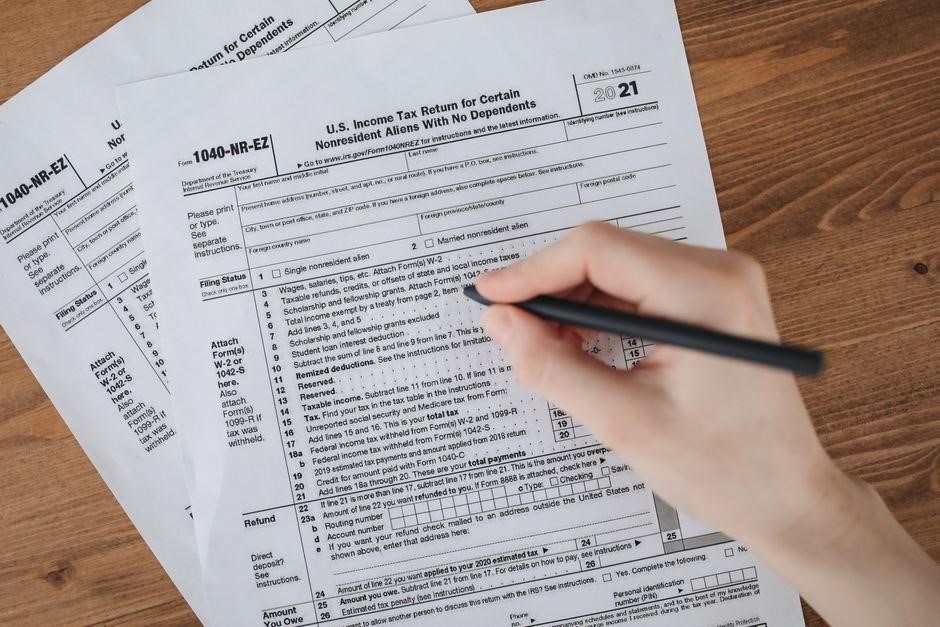
Part IV of Form 5472 is dedicated to reporting monetary transactions between the reporting corporation and a foreign related party. The section is divided into two halves: the first 15 lines (Lines 922‑936) capture sales‑related transactions, while the last 15 lines (Lines 2336‑2350) capture purchase‑related transactions. For each line, the taxpayer must provide the transaction date, a concise description, the foreign related party’s name, address, and TIN, and the transaction amount in U.S. dollars. If the transaction was conducted in a foreign currency, the amount must be converted using the appropriate exchange rate and the conversion rate must be documented. The form also requires the reporting corporation to indicate the basis for the amount, such as invoices or contracts, and to state whether the transaction is a sale of property, a purchase of property, a service agreement, a royalty agreement, or another type of transaction. The reporting corporation must also identify whether the transaction is subject to the 10% tax under IRC §6038A. All monetary amounts must be reported in the same currency as the corporation’s books,disclosed. The reporting corporation must sign and date the form; if filed electronically, a valid digital signature is required. Failure to complete Part IV accurately can result in penalties of up to $10,000 per violation. The IRS may request supporting documentation during an audit, so all entries must be backed by records such as invoices, bank statements, or contracts.

Detailed Instructions for Part V – Foreign-Owned Disregarded Entities
Part V applies exclusively to foreign‑owned U.S. disregarded entities that are not themselves corporations. The entity must be owned 100 % by a foreign corporation or a foreign partnership, and it must be engaged in a U.S. trade or business. The form requires the entity’s name, address, and the foreign owner’s name, address, and taxpayer identification number. The entity must also provide its own EIN, the date it was formed, and the state of incorporation or organization.
For each reportable transaction, the disregarded entity must list the transaction date, a brief description, the transaction amount, and the foreign related party’s details. If the transaction was conducted in a foreign currency, the amount must be converted to U.S. dollars using the appropriate exchange rate and the conversion rate must be documented. The entity must indicate whether the transaction is a sale of property, a purchase of property, a service agreement, a royalty agreement, or another type of transaction, and whether it is subject to the 10 % tax under IRC §6038A.
All monetary amounts must be reported in the same currency as the entity’s books, and the entity must sign and date the form. If filed electronically, a valid digital signature is required. Failure to complete Part V accurately can result in penalties of up to $10,000 per violation. The IRS may request supporting documentation during an audit, so all entries must be backed by records such as invoices, bank statements, or contracts. The entity must also attach a copy of its ownership documentation to prove foreign ownership and the disregarded status.
When the disregarded entity is a U.S. branch of a foreign corporation, the branch must file Form 5472 as if it were a separate corporation, providing the same level of detail. The form should be filed with the corporation’s annual return (Form 1120, 1120‑S, or 1120‑C) or electronically via the IRS e‑File system if the corporation is eligible. The due date for Part V is the same as the reporting corporation’s return filing deadline, with extensions available under the same rules. Proper completion of Part V ensures compliance with IRC §6038A and §6038C and helps avoid costly penalties.

Filing Methods: Mail, Fax, and Electronic Filing
Form 5472 can be submitted by three distinct methods, each governed by specific IRS addresses, fax numbers, and electronic portals. The choice depends on the filer’s technical capability, the volume of returns, and the need for confirmation of receipt.
- Mail: Send the completed form and any required attachments to the special address listed in the Form 5472 instructions. The address is:
- Internal Revenue Service, 1973 Rulon White Blvd., M/S 6112, Attn: PIN Unit, Ogden, UT 84201.
- Mailing the return by certified or registered mail is recommended to obtain proof of delivery.
- Fax: Fax the form to the IRS fax number 855‑255‑0283. Include a cover sheet with filer’s name, EIN, and a brief description of the return. The fax must be sent in a single PDF or paper file, and the IRS will return a confirmation fax within 24 hours.
- Electronic Filing (e‑File): Eligible corporations may file Form 5472 through the IRS’s e‑File system. The filer must have a valid e‑File account and a digital signature. The e‑File process requires the use of the IRS’s e‑File Provider portal. Upon successful transmission, the filer receives an electronic acknowledgment within 48 hours.
Regardless of the method chosen, the filer must retain copies of the return, all supporting documents, and any acknowledgment for at least three years. Failure to file by the due date, or filing incomplete information, can trigger penalties of up to $10 000 per violation.!
Form 5472 must be filed by the due date of the corporation’s income‑tax return, the 15th day of the fourth month after the fiscal year’s end. For calendar filers, the deadline is April 15; electronically filed returns have a May 15 deadline. A 12‑month extension can be requested with Form D‑1120, moving the filing deadline to September 15. Extensions do not extend the period for payment of tax or penalty; the corporation must pay any tax due by the original due date to avoid interest and penalties. The IRS requires the form to be signed by an officer and submitted today.
Late filing incurs a $10,000 penalty per year; filing more than 30 days late increases the penalty to $25,000. The penalty is capped at $25,000 or 5 % of gross receipts, whichever is greater. Interest accrues on unpaid amounts at the applicable federal rate. The IRS may assess additional penalties for inaccurate or incomplete information. Proper documentation and timely filing help avoid these costly consequences. Failure to provide required documentation may trigger a $10,000 penalty per year. Additionally, interest accrues daily!
To avoid penalties, file on time, obtain extensions, and ensure accurate information. If filing by the deadline is impossible, promptly file Form D‑1120 and explain the circumstances. The IRS may grant an extension if a good‑faith effort is demonstrated. Maintaining proper records, timely filings, and clear documentation will help prevent costly penalties and interest charges. The IRS evaluates reported transactions and may request documentation if discrepancies occur. Consistent compliance with form requirements reduces audit risk and ensures smoother interactions with tax authorities.

Resources and Further Reading
For a comprehensive understanding of the form and its requirements, consult the official IRS guidance. The form 5472 instructions provide line‑by‑line details, filing deadlines, and penalty information. The IRS website hosts the latest PDF, updated annually, and includes a Frequently Asked Questions section that clarifies common ambiguities.
- IRS Publication 542 – Tax Guide for Corporations, which explains related‑party rules and the statutory basis for Form 5472.
- IRS Form 1120 Instructions – contains cross‑references to Form 5472 and explains how the two forms interact.
- IRS Form 1120‑S Instructions – for S‑Corporations that may still need to file Form 5472 if foreign ownership exceeds 25 %.
- IRS Form 1120‑C Instructions – for foreign corporations engaged in U.S. trade or business, providing guidance on related reporting.
- IRS Publication 901 – U.S. Tax Guide for Aliens, covering foreign‑owned entities and reporting obligations.
- IRS Publication 542A – detailed guidance on related‑party transactions and the reporting framework.
- IRS Interactive Tax Center – offers electronic filing options, status checks, and the ability to request extensions.
- Tax Foundation Research Reports – independent analyses of foreign‑ownership reporting trends and enforcement priorities.
- Professional Tax Software Guides – many commercial packages provide step‑by‑step wizards for Form 5472, often with built‑in validation checks.
- Legal and Accounting Firms’ White Papers – provide case studies, best practices, and updates on recent IRS rulings.
Staying current with IRS updates, webinars, and the “form 5472 instructions” PDF ensures compliance and helps avoid penalties. For real‑time assistance, contact a qualified tax professional or the IRS Business & Specialty Tax Line at 1‑800‑829‑4933.